
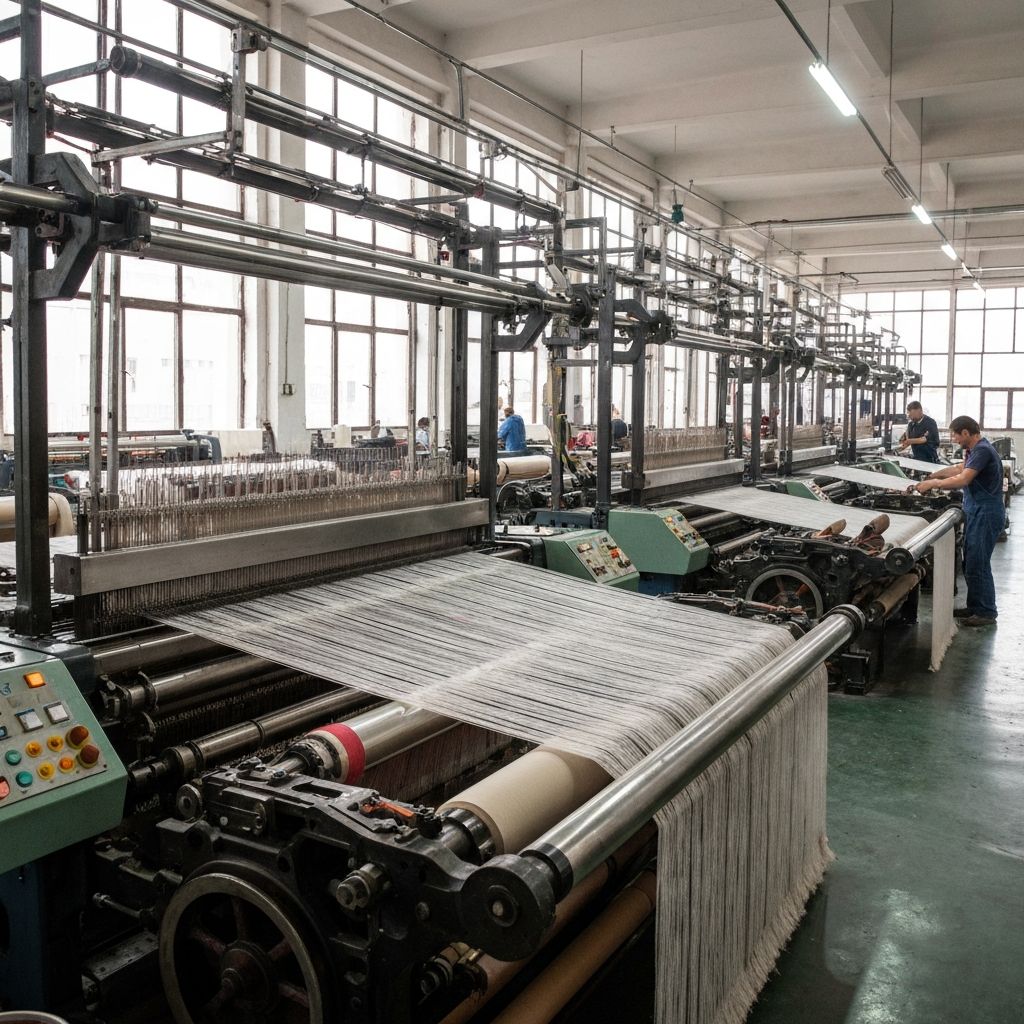
Top Weaving Machine Brands in India
A practical guide to leading weaving machine brands and the engineering priorities that make each one different.
By Requip
Choosing a weaving machine brand
India’s textile manufacturing ecosystem supports everything from high-speed commodity fabric production to specialised export-oriented textiles. Choosing the right weaving machine brand depends on fabric type, production targets, energy use, maintenance capability, and local service support.
Different manufacturers follow different engineering philosophies. Some prioritise speed and precision, while others focus on flexibility, energy efficiency, or long-term durability.
Leading brands used in India
Toyota Industries
Toyota air-jet looms are widely respected for consistent performance, long operational life, and stable output at high speeds. JAT-series machines are common in mills that prioritise reliability and fabric uniformity.
Tsudakoma
Tsudakoma manufactures air-jet and water-jet looms recognised for energy-efficient systems and refined yarn handling, particularly for lightweight and fine fabrics.
Picanol
Picanol rapier and air-jet machines are known for versatility. They can handle a broad range of yarns and constructions, making them useful for mills that change styles frequently.
Dornier
Dornier focuses on structural stability and fabric precision, including technical textiles and wider-width applications where consistency is essential.
Itema
Itema supports rapier, air-jet, and projectile technologies. This range makes it relevant across general weaving and selected high-strength fabric applications.
Rifa and Haijia
These manufacturers focus on scalable, cost-efficient air-jet production and are used in high-volume environments.
Vamatex
Vamatex rapier looms are known for smooth yarn handling and balanced mechanical design. Reconditioned models remain common in Indian mills.
How to choose the right machine
- Match the machine to the fabric type and construction.
- Define realistic production speed and quality tolerances.
- Compare power and compressed-air consumption.
- Confirm maintenance capability and spare-parts availability.
- Evaluate local service support.
- Verify the condition of an individual machine instead of relying on brand reputation alone.
How Requip supports a safer purchase
Requip combines machine inspection, condition documentation, warranty support on eligible machines, installation, and ongoing service so buyers can compare real machine condition as well as model specifications.